Hackathon Winner Caleb Zerihun: ‘Just Compete Even if You Don’t Feel Completely Prepared’
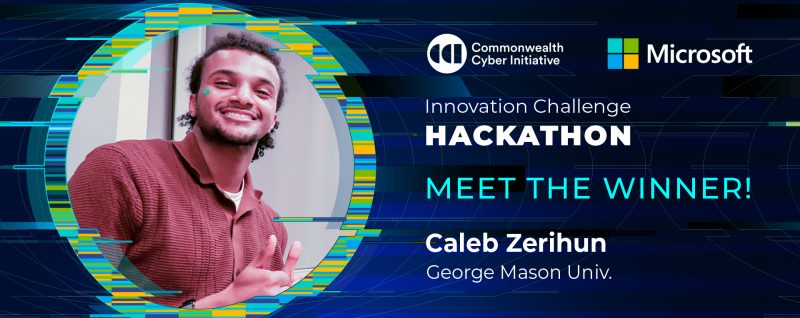
The Microsoft CCI Innovation Challenge Hackathon – held Sept. 21-25, 2026 – invited students to tackle real-world challenges facing Virginia's public, academic, nonprofit, and business communities while building a working AI solution that demonstrates their skills and creativity.
The challenge brought together 200 students from 14 Virginia colleges and universities to compete for a $10,000 prize.
Students attend Christopher Newport University, College of William & Mary, ECPI University, George Mason University, James Madison University, Laurel Ridge Community College, New River Community College, Norfolk State University, Northern Virginia Community College (NOVA), Old Dominion University, Radford University, University of Virginia, Virginia Commonwealth University, and Virginia Tech.
The winner: Built by George Mason University students Iamen R. Ibrahim and Caleb Zerihun, Last-Mile Assist helps people recovering from a disaster quickly find resources based on their location and needs.
Read Microsoft's announcement to learn more about the winning project and other standout entries.
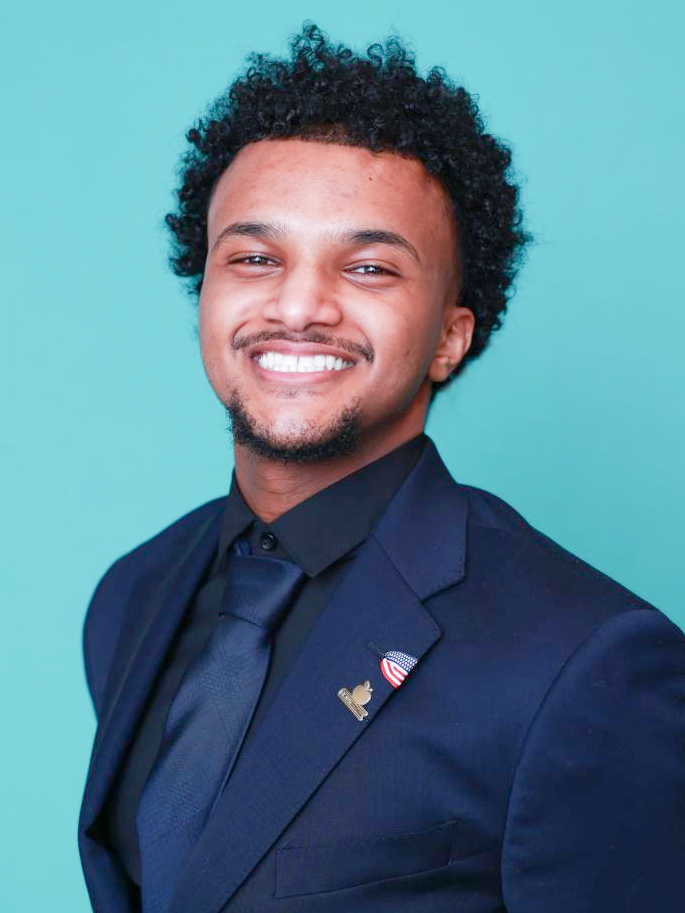
Caleb Zerihun
Caleb Zerihun is a George Mason University student studying information technology with a concentration in cybersecurity. He's also president of the National Society of Black Engineers at Mason.
Why did your team select disaster recovery?
We selected disaster recovery because we wanted to build something that could have a real impact on people. During a disaster, many resources are already available through federal, state, and local organizations, but actually finding the right resource and figuring out the next steps can be confusing. With Last-Mile, our goal was to simplify that process. A user can enter their ZIP code, what they need help with and a little information about their situation. The platform then provides a clear action plan with relevant programs, necessary documents, official links, and ways to get additional help.
What were your biggest obstacles and how did you overcome them?
One of our biggest challenges was making sure the information our AI provided was reliable. Since we were dealing with disaster assistance, we didn't want the system making up programs or giving users inaccurate information. We focused heavily on grounding the AI in trusted government and official sources so that the recommendations it generated were based on real resources. Another challenge was simply the time constraint. We had to divide responsibilities, communicate constantly, and prioritize the features that would have the biggest impact instead of trying to build everything at once.
What are the benefits you gain from taking part in challenges?
Challenges like this give me an opportunity to take what I'm learning in school and actually apply it to a real problem. As an IT student, I can learn about cloud computing, cybersecurity, programming, and AI in class, but a hackathon forces you to combine those skills and build something that actually works. It also teaches you things that are harder to learn in a classroom, like working under pressure, communicating with a teammate, making quick technical decisions, and presenting your work to other people.
What's your advice to students who want to compete in challenges?
My biggest advice would be to just compete even if you don't feel completely prepared. You don't need to know everything before joining a hackathon. A big part of the experience is learning while you're building. I would also focus on solving a real problem rather than trying to make the most technically complicated project possible. Start with the problem, understand who you're building for, and then use technology to create the best solution you can. Also, don't be afraid to ask questions or change your original idea as you learn more.
What are your plans after graduation?
I graduate from George Mason University in December 2027 with a bachelor's degree in information technology and a concentration in cybersecurity. After graduation, I want to work in cybersecurity or cloud security, ideally in a role where I can combine my experience with cloud infrastructure, security, and emerging technologies like AI. Long term, I want to continue developing as an engineer while working on technology that solves meaningful problems.
What are your plans for the prize money?
Winning $10,000 was definitely unexpected, so I'm still figuring out exactly what I want to do with it. I plan on saving and investing a large portion of my share while also using some of it for tuition and professional development!