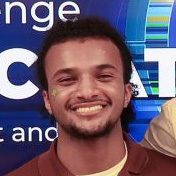
Hackathon Winner Iamen Ibrahim: ‘Think in Terms of the Problem, Not the Technology’
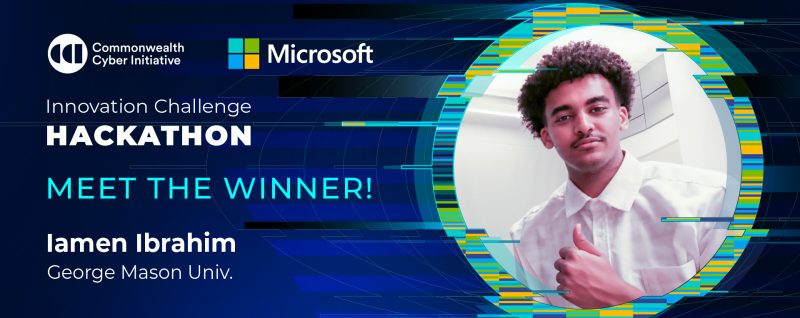
The Microsoft CCI Innovation Challenge Hackathon – held Sept. 21-25, 2026 – invited students to tackle real-world challenges facing Virginia's public, academic, nonprofit, and business communities while building a working AI solution that demonstrates their skills and creativity.
The challenge brought together 200 students from 14 Virginia colleges and universities to compete for a $10,000 prize.
Students attend Christopher Newport University, College of William & Mary, ECPI University, George Mason University, James Madison University, Laurel Ridge Community College, New River Community College, Norfolk State University, Northern Virginia Community College (NOVA), Old Dominion University, Radford University, University of Virginia, Virginia Commonwealth University, and Virginia Tech.
The winner: Built by George Mason University students Iamen R. Ibrahim and Caleb Zerihun, Last-Mile Assist helps people recovering from a disaster quickly find resources based on their location and needs.
Read Microsoft's announcement to learn more about the winning project and other standout entries.
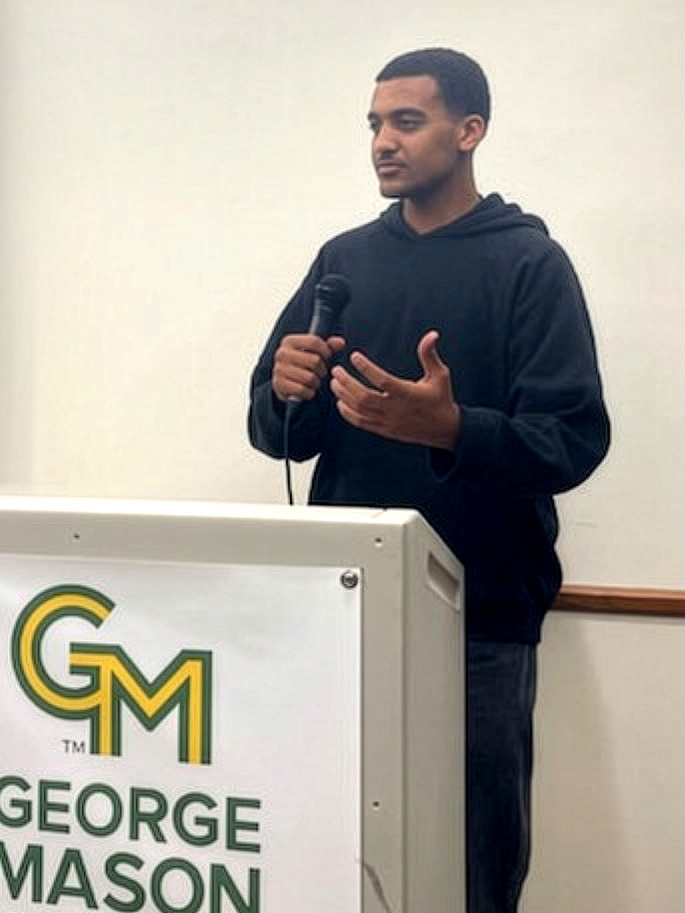
Iamen R. Ibrahim
Iamen R. Ibrahim is a George Mason University computer science student focused on software engineering, AI, and applied research and plans to graduate in 2028.
Why did your team choose disaster recovery?
We selected disaster recovery because it is a problem that can have a direct impact on someone's life if the right information is not available. Resources may be available after a disaster, but people will still have to navigate multiple agencies, eligibility criteria, deadlines, and unfamiliar jargon in addition to the stress of a disaster. We wanted to see if AI could eliminate that friction and help people move from "Where do I even start?" to a clear next step. That was the concept for Last-Mile Assist.
What were your biggest obstacles and how did you overcome them?
The most difficult aspect was ensuring the AI was helpful without being unreliable. For disaster recovery, a confident but incorrect answer can be worse than no answer at all. The system was built with verification, structured outputs, validation, and safeguards instead of an unchecked "chatbot." The other difficulty was developing a project that was both functional and built within a very limited competition time frame. We needed to focus on the features that really captured the essence of the concept, run tests rapidly, and continually consider whether each feature truly enhanced the user experience.
What are the benefits you gain from taking part in challenges?
Challenges allow me to apply what I have learned in class to problems that don't have a set answer. Sometimes, they combine software engineering, AI, research, communication, and product design in a way that courses don't always cover. They also make me more comfortable going from a problem statement to a working system and then describing the significance of the technical choices.
What's your advice to students who want to compete in challenges?
Think in terms of the problem, not the technology. Starting with a tool you wish to use and then looking for a problem to solve is easy, but the best projects usually begin with a problem that needs to be addressed. Also, I would suggest building something small but functional early. If the core experience is successful, you can improve it. Most importantly, compete even if you do not feel 100% prepared. One of the best places to learn is through competition, as it requires you to push past what you know how to do.
What are your plans for after graduation?
I will keep developing my skills in computer science and cybersecurity by continuing my internships, research, and software projects. I am also interested in developing intelligent systems that solve real-world problems and can create measurable impact for the people who use them in the longer term.
What are your plans for the prize money?
The prize will be used to further my education, future technical projects, conferences, and development. I'd also like to consider the potential for the concepts behind Last-Mile Assist to expand beyond the competition and be applied in other real-world scenarios.