


Seven Takeaways from CCI's European AI and Cybersecurity Workshop
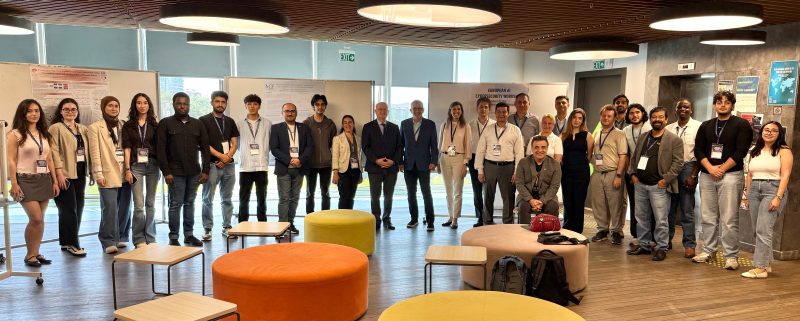
We are grateful for the warm reception that the CCI team had from the rector of MEF University and his entire team, and I am excited by the opportunity to build closer collaborations with universities, government agencies, and industry in Türkiye and other allied countries. This workshop reinforces CCI's role in driving international partnerships and shaping the future of AI-enabled cybersecurity.
— Luiz DaSilva, Executive Director, Commonwealth Cyber Initiative
Artificial intelligence is transforming cybersecurity, creating new opportunities for defense while increasing the speed, scale, and sophistication of cyber threats.
In June 2026, the Commonwealth Cyber Initiative (CCI) co-organized and convened the European AI and Cybersecurity Workshop at MEF University in Istanbul, Türkiye. Organized by Erdem Topsakal, director of the CCI Central Virginia Node, in partnership with MEF University and the CCI Hub, the workshop brought together nearly 100 participants from 32 institutions across the United States, Türkiye, Belgium, and Kazakhstan to explore the intersection of AI, cybersecurity, governance, and education.
The discussions brought together perspectives from academia, industry, and government, highlighting key trends that are likely to influence the future of cybersecurity research, policy, and practice. The following themes emerged as the workshop's most significant takeaways.
Seven Key Takeaways
1. AI is transforming both cyber offense and cyber defense.
The same technologies enabling more sophisticated attacks are also creating powerful new tools for threat detection, prediction, and response.
2. Cybersecurity is shifting from reactive to proactive.
Organizations are increasingly moving toward AI-enabled systems that continuously monitor environments, identify risks, and automate defensive actions before attacks occur.
3. Trust is becoming a strategic requirement.
International collaboration depends on transparent governance, responsible AI practices, and shared norms that enable institutions and nations to work together effectively.
4. Policy alignment matters.
Differences in regulations and governance frameworks can slow collaboration, making international coordination an increasingly important cybersecurity issue.
5. Workforce development remains a global priority.
Meeting future cybersecurity challenges will require sustained investment in education, research partnerships, and opportunities for students and early-career professionals.
6. Governance must evolve alongside technology.
As AI capabilities advance, accountability, data protection, ethics, and security considerations must keep pace with innovation.
7. Global challenges require global partnerships.
No single institution, sector, or country can address AI-enabled cybersecurity challenges alone, making cross-border collaboration essential.
Looking Ahead
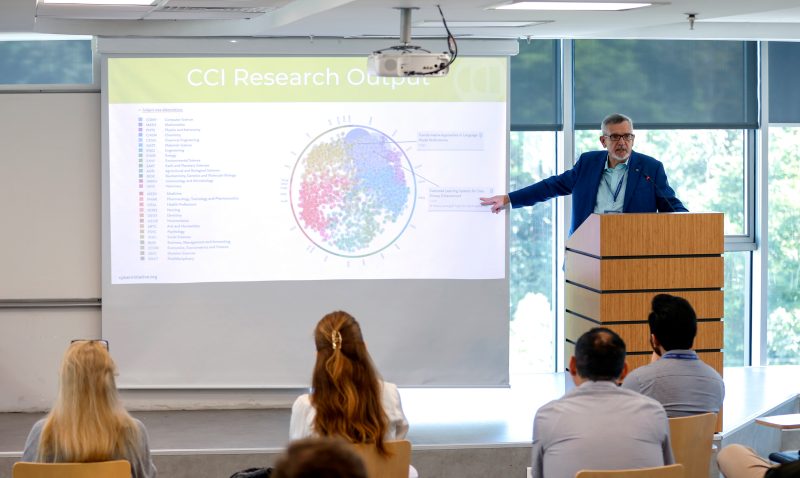
The workshop also featured a keynote on AI and security, a panel discussion on governance and public policy, discussions on AI's impact on education, and student research presentations from MEF University, Koç University, and Atlas Üniversitesi. These exchanges created opportunities to strengthen international research networks and identify new avenues for collaboration across academia, industry, and government.
By convening international experts and facilitating dialogue on emerging challenges, CCI continues to play a leadership role in shaping the future of AI-enabled cybersecurity and strengthening the partnerships needed to address increasingly complex global security challenges.